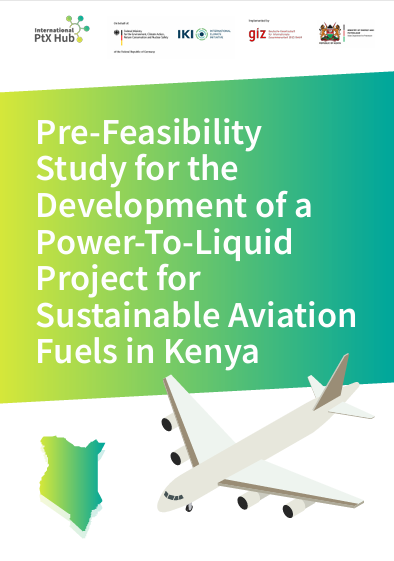
Powering the Skies: Mapping Kenya’s Path to Sustainable Aviation Fuels
A new pre-feasibility study assesses the potential to develop a commercial SAF facility in Kenya, positioning the country as a future hub for low-carbon aviation fuels in East Africa.
The study focuses on the Methanol-to-Jet (MtJ) pathway and evaluates market demand, technology options, feedstock availability, policy frameworks, and detailed techno-economic and financial modelling. Findings show that Kenya’s growing aviation sector, combined with abundant renewable energy resources, creates strong long-term potential for Sustainable Aviation Fuel (SAF) production and export. The proposed Power-and-Biomass-to-Liquid (PBtL) concept could produce nearly 22,000 tonnes of SAF annually while supporting national climate and energy goals.
While production costs remain higher than conventional jet fuel, the study highlights key conditions for competitiveness. These include targeted policy support, premium SAF contracts, access to carbon markets and concessional finance. The report provides a clear roadmap from pre-feasibility to commercial operation and aims to guide policymakers, investors, and industry stakeholders in advancing SAF development and positioning Kenya within the global emerging market for sustainable aviation fuels.
Key Findings
- Kenya’s aviation market and international climate regulations are driving future demand for SAF.
- Abundant renewable energy (solar, wind, geothermal, hydro) and sustainable biomass make Kenya suitable for PtL/PBtL fuels.
- The Methanol-to-Jet pathway is recommended for its flexibility, modularity, and market-ready intermediate products.
- Three potential sites—Olkaria, Nairobi, and Mombasa—offer complementary advantages in energy access, infrastructure, and logistics.
- Estimated SAF production costs exceed current market prices, indicating the need for policy incentives and premium offtake agreements.
- A phased development roadmap outlines clear steps toward investment decision and commercial operation.