
PtX Hub in Uruguay
Starting off in a frontrunner position with high renewables share
Since 2018, Uruguay is analysing the potential for producing green hydrogen and PtX products. In June 2022, a roadmap for a national green hydrogen and PtX development strategy with concrete next steps was presented. In 2022, the focus lay on developing political instruments to promote the PtX market uptake, to conduct respective studies and to engage in stakeholder dialogue. With this, Uruguay is clear on its high ambitions towards renewable PtX and hydrogen.
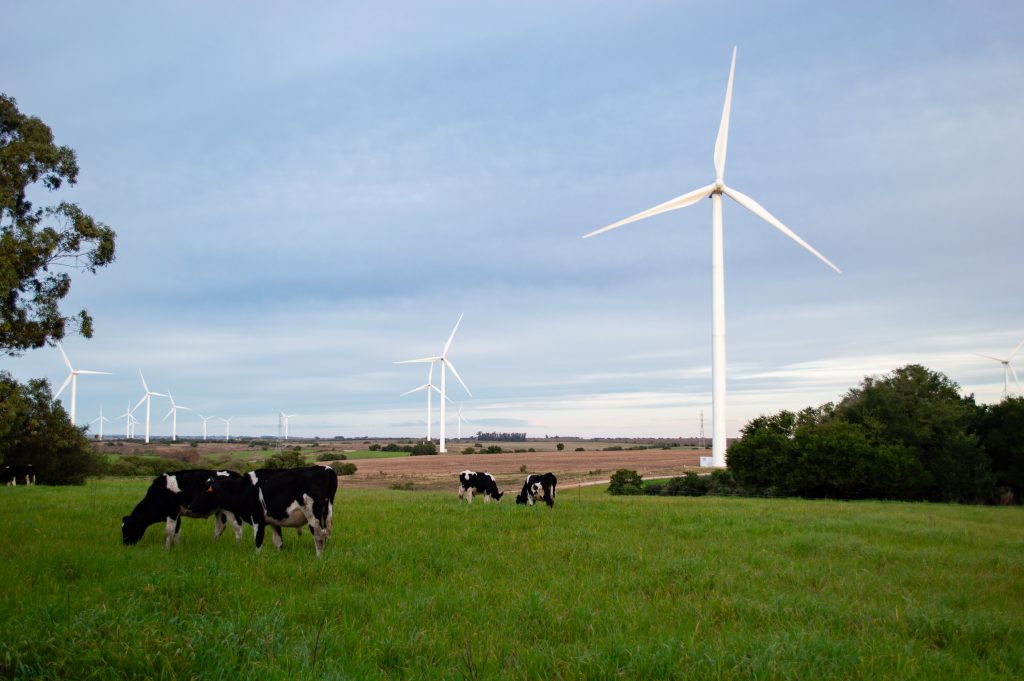
Particularly the fact that Uruguay has almost reached 100 % renewables in its electricity mix makes it such a promising site for green hydrogen production. The country produces its electricity from hydro, wind, biomass and solar photovoltaic sources. Through fast renewables expansion, Uruguay is already a net exporter of its surplus electricity uninterrupted since 2013. Furthermore, Uruguay has a great potential to install new electric power generation capacity from renewable sources, especially wind and solar photovoltaic with high complementarity between them.
New challenges in the energy transition
To reach the defossilisation goals for the economy, green hydrogen and PtX development is seen as a natural step for exploring, principally for the hard to abate sectors. For the short- and medium-term, Uruguay is particularly interested in developing the production of e-fuels, as jet fuel and methanol, for international markets; while for domestic demand green hydrogen for heavy transport and fertiliser that replace imports are considered. The potential of Uruguay’s natural and energy resources will allow to expand the installed capacity of the Uruguayan power system by 2040 to 20 GW from renewable energies and to 10 GW for electrolysers.


The PtX Hub’s work in Uruguay at a glance
1. Building capacities in key organisations
- Participating in the Green Hydrogen group, and supporting the Uruguayan Ministry for Industry, Energy and Mining (MIEM) in evaluating the PtX promotion activities.
- Promoting and facilitating exchanges between local stakeholders.
- Conducting the basic PtX.Training as well as add-on modules on certification, safety, and regulatory frameworks, specific PtX applications
- Offering local experts to participate in the Train-the-Trainer programme
2. Expanding knowledge to inform decision-making on PtX pathways
- Analysing the regulatory framework needs on security aspects for development
- Supporting the integration of sustainability aspects into PtX planning
- Analysing the local CO2 availability for PtX development
- Assessing skills and competences needed for PtX development
- Performing scoping studies on the defossilisation of local industries with PtX
- Detecting capacity needs and supporting their development
3. Connecting networks in the region
- Conducting dialogues on safety, standards, and regulatory frameworks
- Planning workshops for a regional peer-to-peer exchange with Chile
- Organising delegation and study trips to Germany and to Chile
4. Highlight efforts for sustainability:
- Government Initiative: MIEM’s leadership in evaluating PtX promotion activities and developing a national strategy.
- Private Sector Collaboration: Initiatives like the ‘H24U‘ green hydrogen pilot project and projects focusing on green methanol and petrol production.
5. Next big projects for GH2/PtX:
- Implementation of Green Hydrogen and Derivatives Roadmap.
- H2U Program focusing on capacity building, regulations, investment, infrastructure, and social dialogue.
- Continued collaboration between research, academia, private sector, and government.
6. Significant impacts and benefits of PtX Hub project:
- Diversification of energy sources and reduction of dependence on fossil fuels.
- Economic growth, job creation, and innovation in renewable energy sectors.
- Progress towards long-term sustainability and resilience goals.
7. Collaboration opportunities within South-South cooperation:
- Sharing experiences, expertise, and resources with other countries in the region.
- Joint research projects, technology transfer initiatives, capacity-building programs, and policy dialogues.
- Strengthening regional partnerships and contributing to global sustainability objectives.
8. Government support for innovation in PtX technologies:
- Development of national green hydrogen and PtX development strategy.
- Collaboration with international partners like IDB and BMWK.
- Incentives such as funding opportunities, tax incentives, and regulatory support for research, development, and commercialization.
Resources:
- Engaging Local Communities in Large-scale H2/PtX Project Planning
- Partner Event at the Berlin Energy Transition Dialogue 2024
- Uruguay makes progress in its second energy transition with Power-to-X
- Study: analysis of CO2 availability for the production of Power-to-X products in Uruguay
- Partner Event at the Berlin Energy Transition Dialogue 2023.
- Renewable PtX as a building block for sustainable chemistry in Uruguay: ISC3 and PtX Hub make the connection