Compliance with standards and certification is essential to ensure PtX sustainability. They must provide clarity and orientation for investors, managers and customers. Without, it would simply be impossible to attract investments and to ramp up functioning PtX markets.
To ensure credibility and reliability of standards and certified labels, the integrity of the procedures for certification must be robust. Hidden loopholes, excessive flexibility or simply too low standards can result in “greenwashing”, which would undermine the market.
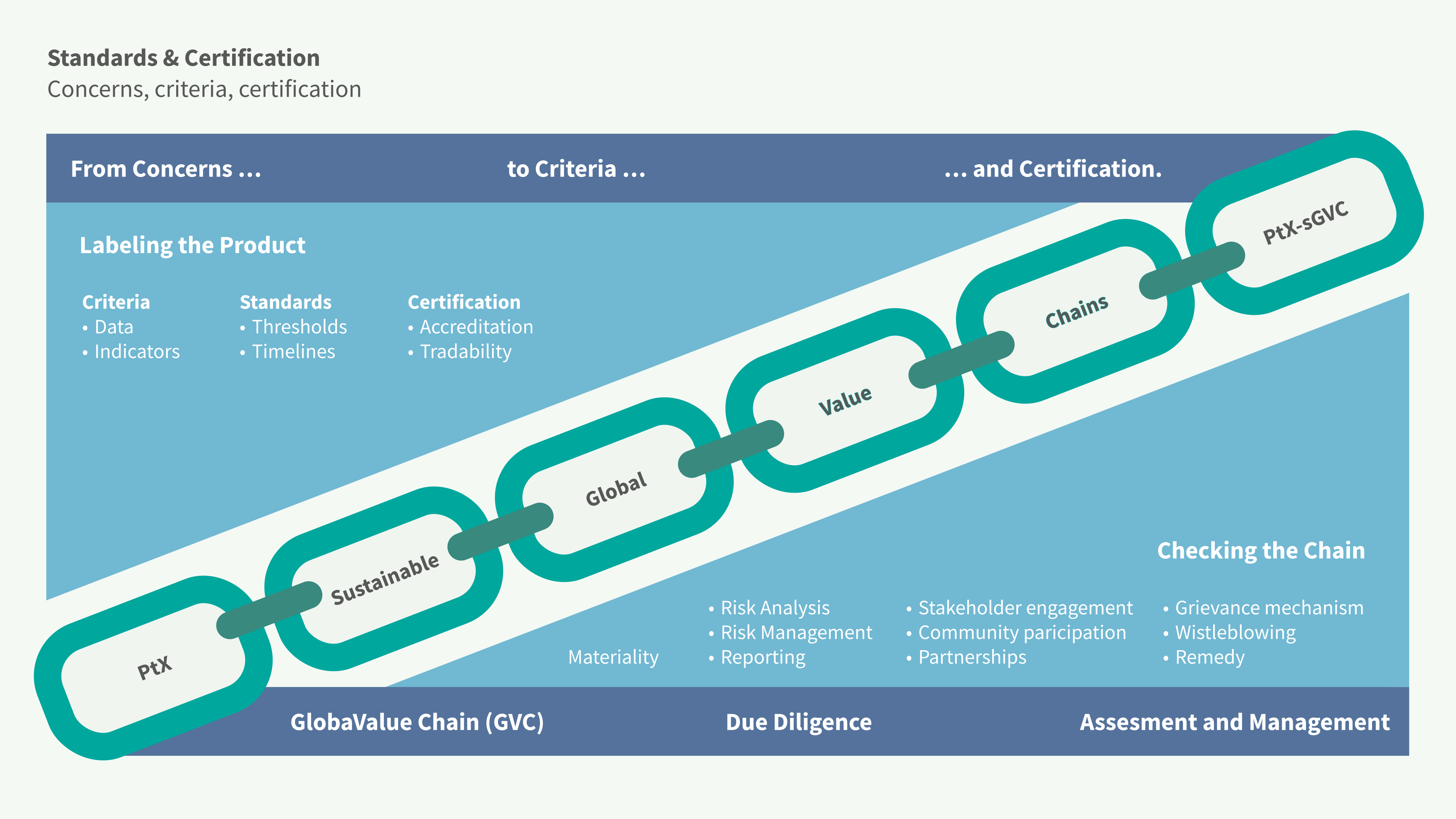
Source: International PtX Hub, own illustration.
Figure explanation: Regulatory frameworks with standards and certification play a crucial role in establishing reliable bases for creating hydrogen and Power-to-X markets. Both producers and offtakers need to know the characteristics and qualities of Power-to-X products and processes. This information must be made available for each actor in the global value chain. Sustainability aspects must be translated and concretised in measurable data and indicators, for which threshold values and, eventually, timelines for achieving them, must be set. For these hydrogen and Power-to-X sustainability standards, certification schemes must be established, with reliable auditing and credible verification procedures and transparent reporting mechanisms. Only then can hydrogen and Power-to-X products be marketed as sustainable. Ultimately, the certificates themselves could eventually be traded instead of the physical products. Such a “certify and trade” or “book-and-claim” system decouples sustainability attributes from the physical product and thereby increases market liquidity while reducing transport emissions. This process of labelling the product should be accompanied by a due diligence procedure for assessing and managing the entire hydrogen and Power-to-X value chain. Risk analysis, risk management and reporting are of crucial importance. Stakeholder engagement and community involvement should be ensured. Where possible, partnerships should be established, accompanied by grievance mechanisms with whistleblower protection. Finally, reliable remedy mechanisms should be in place in the event of significant adverse impacts.
An independent third-party evaluation can relieve those concerns. Auditors should be accredited only if they meet clearly defined qualifications and if their work is regularly reviewed. They should also have contracts for a certain period (e.g. 3-5 years), after which audits have to be performed by another independent assurance provider. This prevents anyone from attempting to bribe the auditor, since it will get caught when the next auditor takes over.
Governments must ensure that accreditation and certification meet internationally agreed quality standards. Registers must be established which keep track of product quantities, origin, trade and final use. Once products have reached the final offtaker, certificates must be cancelled. Only if acceptable and reliable schemes can be established, will it be possible to operate “book-and-claim” or “mass balance” systems for ensuring quality properties of products and facilitating their market transfers.


