Building a clean industrial future is not just about technology. It is about the people who carry it. People like Prof. Paul Kamweru.
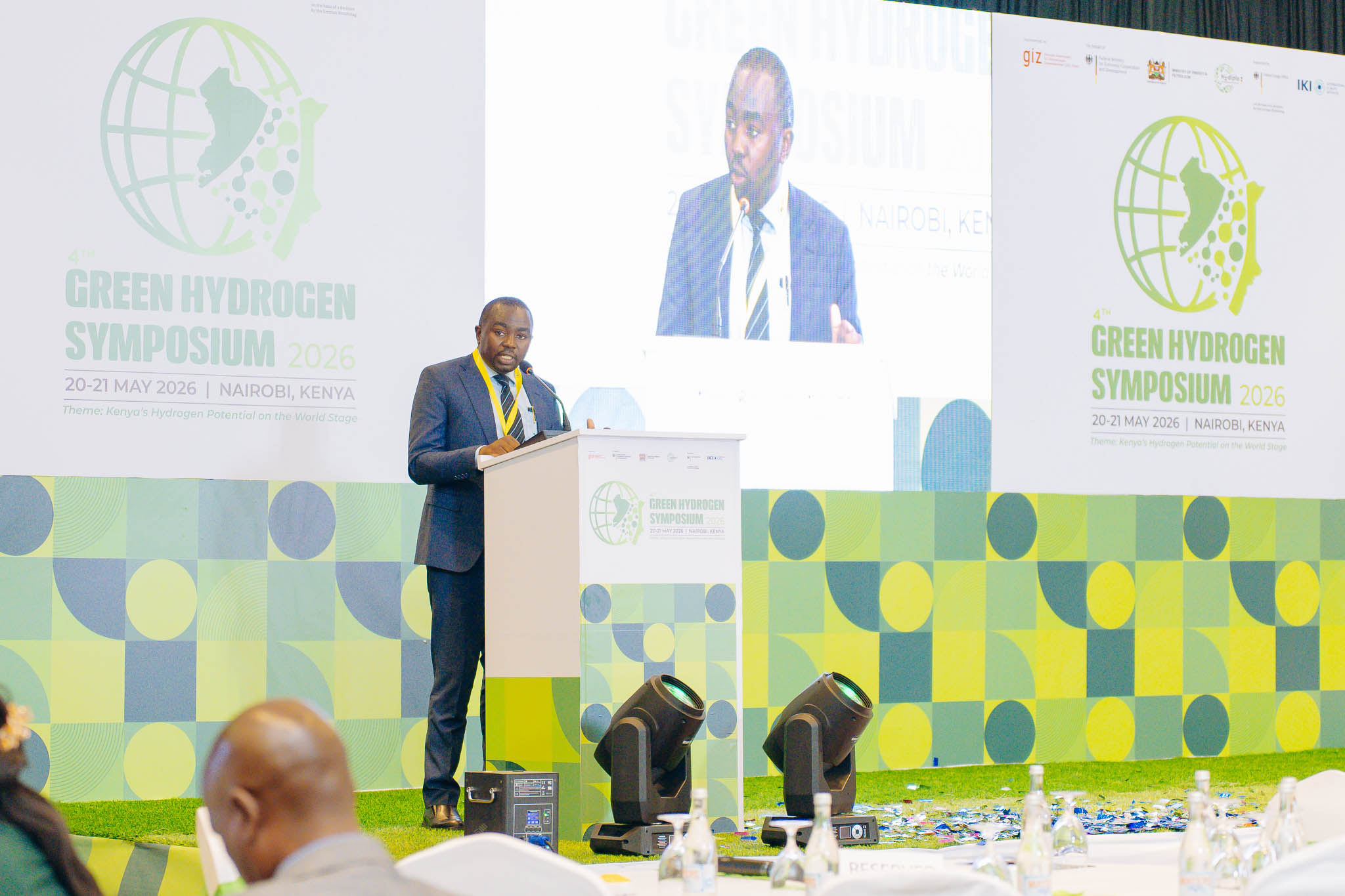
For many years, Prof. Paul Kamweru has taught physics at Chuka University in central Kenya. As Dean of the Faculty of Science and Technology, he is accustomed to leading lectures and mentoring the next generation of scientists. In the summer of 2025, however, he became a learner himself. Together with fourteen other Kenyan experts, he travelled to Germany to gain expertise in Power-to-X technologies—an emerging field that, until recently, was scarcely taught in Kenya.
The group participated in the Renewable Power-to-X (PtX) Train-of-Trainers (ToT) programme organised by the International PtX Hub. The aim was to jointly deep dive into the current technological innovations and regulatory developments of PtX, giving Kenya the potential to leapfrog ahead into a carbon neutral future with this knowledge.
What Prof. Kamweru brought home from those weeks in Germany would not stay confined to a single classroom.
“Attending the International PtX Hub’s Renewable PtX Train-of-Trainers programme was the single most transformative step in my professional development. The PtX Hub didn’t just train me. They invested in me as a multiplier whose impact is now being felt in education, national policy, and international partnerships.”
The word “multiplier” is not chosen lightly. Since returning to Kenya, Prof. Kamweru has been actively engaged in infusing Power-to-X (PtX) and green hydrogen (GH2) content into existing energy programmes and in developing new university-level curricula in these emerging fields. In parallel, he is currently leading a capacity-building initiative that trains university and TVET lecturers as multiplier trainers, reaching nearly one hundred stakeholders, including policymakers, academics, and technical trainers.
His PtX journey reflects a wider ambition. Kenya is preparing to take its place in the clean energy economy, with an abundance of renewable resources to draw on. The plan is to first meet its own needs, in sectors such as e-fertilisers, green steel and clean transport, before positioning Kenya as a regional and global supplier of green commodities, exporting what it can produce sustainably at home.
But ambitions of that scale rest on people. Experts who can take what they have learned and pass it on to the next wave. The training in Germany was just the first step.
Learning by stepping into the role of trainer
The comprehensive Train-of-Trainers programme (ToT) on Renewable PtX was designed precisely to address this human capacity gap, in three phases:
Firstly, over three intensive weeks, participants received a comprehensive grounding in PtX technologies – from green hydrogen production to e-fuels, green ammonia, and green steel in Germany.
Next, this programme organised by the International PtX Hub in collaboration with the Developing Foundations for a green Hydrogen Economy in Kenya (GH2 Foundations) Initiative, offered teaching simulations, during which participants switched from the role of learner to that of trainer.
Finally, to ensure that the acquired knowledge remained not only theoretical but also inspired for transfer activities in local Technical and Vocational Education and Training (TVET) and universities in Kenya, the final phase took place: site visits.
What it means to touch the technology and see PtX in action
In the first phase, these visits took the group across Germany, offering a glimpse of what the transition towards a low-carbon industry looks like in practice. The programme enabled the participants to see this for themselves, to step inside the facilities and familiarise themselves with the technologies powering the change.
From ammonia production sites to green steel plants and e-fuels facilities, each stop revealed how technologies are embedded into industrial processes.
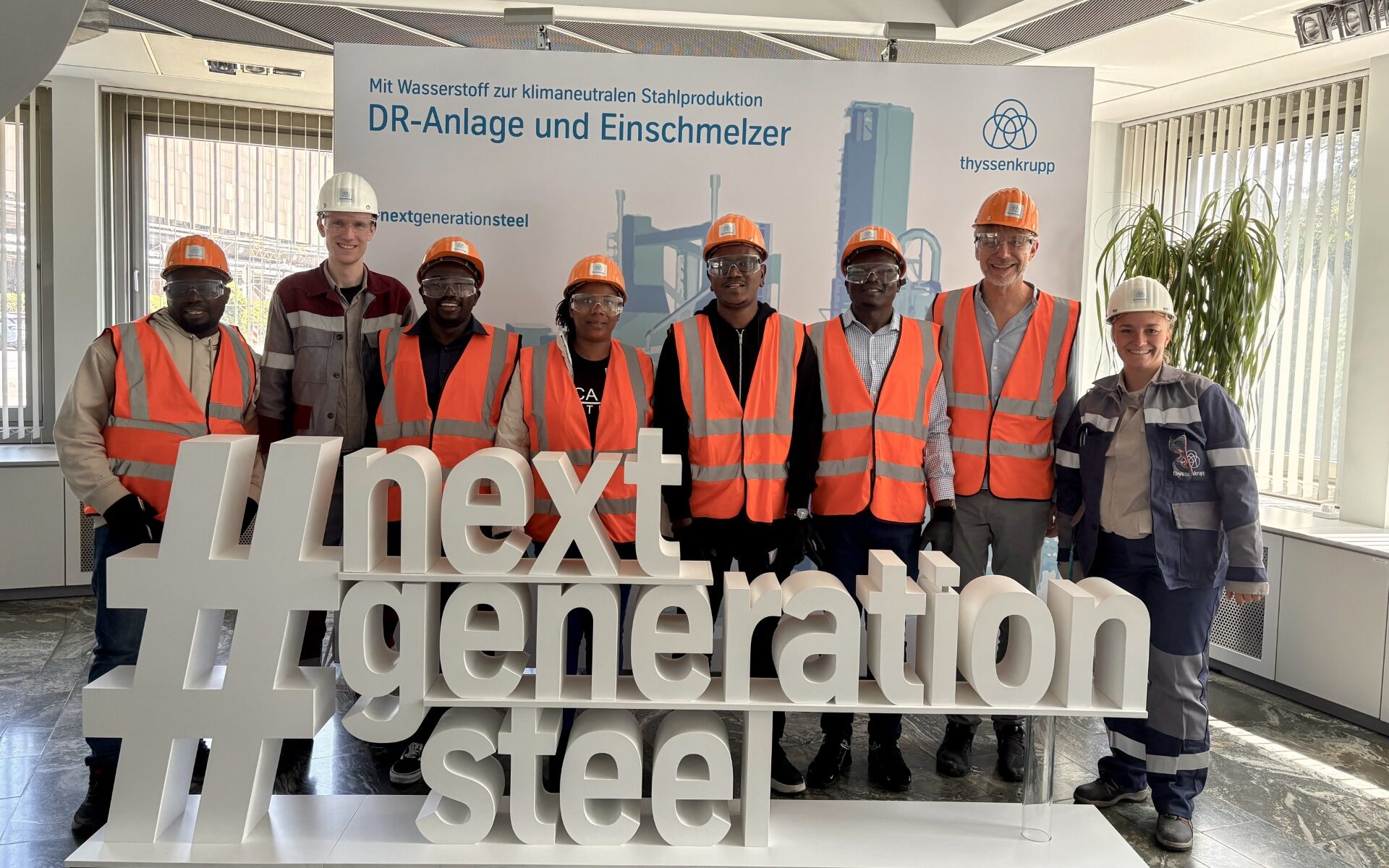
One such stop took place at the Salzgitter steel plant in Germany, where participants observed conventional coal-based steel production and examined its high carbon intensity before engaging with the ongoing transition under the SALCOS (Salzgitter Low CO₂ Steelmaking) programme. The initiative is progressively replacing blast furnace processes with hydrogen-based direct reduction and electric arc furnaces, supported by on-site green hydrogen production via a 100 MW electrolysis plant. The visit illustrated how one of the world’s most carbon-intensive industries is being re-engineered towards climate neutrality, with the potential to reduce emissions by more than 95%. The group also visited Thyssenkrupp in Duisburg, where they explored ongoing efforts to decarbonise steel production through emerging hydrogen-based technologies.
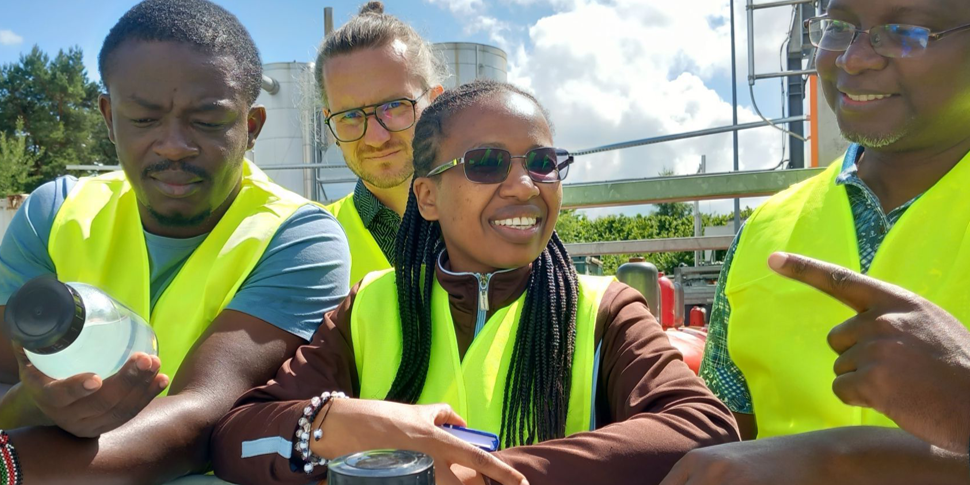
Another stop took place at the pioneering e-kerosene production plant in Emsland in Northern Germany. There, participants handled – after cooling – Fischer-Tropsch wax, a synthetic crude derived from green hydrogen and biogenic carbon dioxide. Once refined, the same material now fuels flights out of Hamburg Airport.
Beyond the technology, understanding the ecosystem that makes it scale
The site visits were not only about seeing the technology. They were also about meeting the people building it.
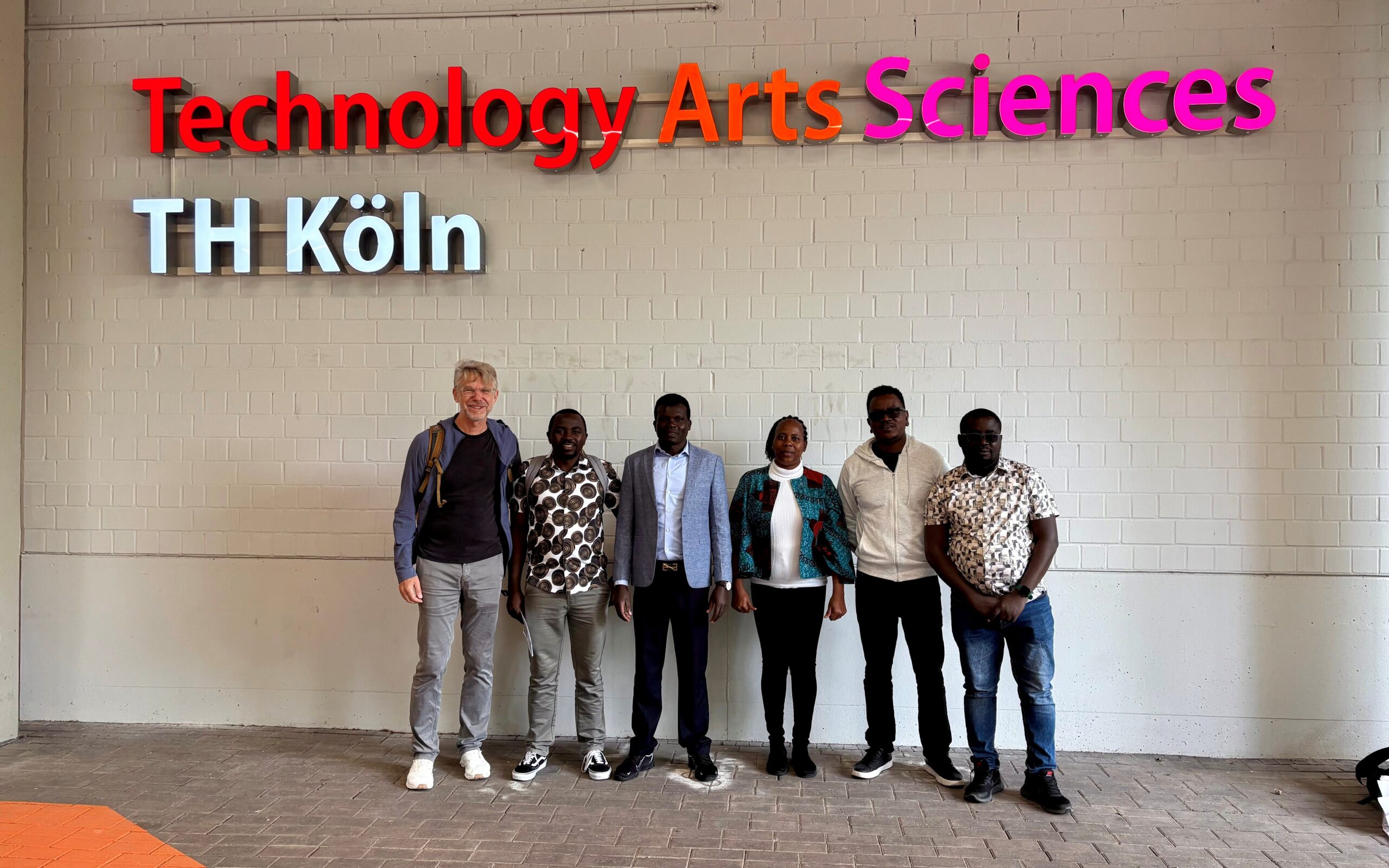
At Berlin University of Applied Sciences and Technology (BHT), RWTH Aachen University and TH Köln University of Applied Sciences in Cologne, the study group engaged with academic experts and “learned how research can be designed with a clear focus on market readiness, technology transfer, and value chain integration”, as one participant pointed out. For the Kenyan experts who are themselves academics, this highlighted how industry, research and policy can collaborate, through what they described as the “triple helix model of innovation”.
The diversity of companies visited gave the group a clear sense of the private sector behind any Power-to-X transition. From industrial sites such as Yara International’s ammonia production facilities to major steel decarbonisation projects like Salzgitter AG, participants observed the business models and strategies shaping the field. The programme also included academic and technical exchanges through the Green Steel Group engagements, strengthening the link between research, training, and industrial application.
Yet not everything seen in Germany can be lifted and applied directly. Lessons from a country with decades of experience in heavy industry need to be adapted to Kenya’s own pathway, where some existing systems may be retrofitted and others built anew. That distinction, between what is transferable and what is context-specific, is perhaps the most valuable insight the delegation took home.
Carrying the knowledge forward, in Kenya and partner countries
Back in Kenya, the work begins. As Professor Kamweru put it, the Train-of-Trainers programme was not the destination, but the start of a much wider effort to build the country’s Power-to-X expertise.
The conviction he brought home is shared by the rest of the cohort:

“I now feel capable to go and train others on the matters of green hydrogen and the entire Power-to-X value chain. We will go and transform Kenya towards Power-to-X production.”
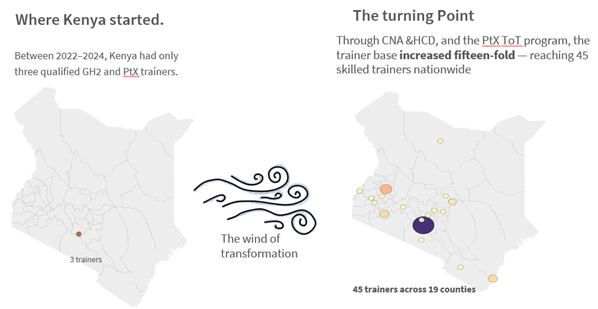
The numbers are already shifting. Between 2022 and 2024, Kenya had only three certified green hydrogen and Power-to-X trainers in the entire country. Today, that figure stands at 45, working across 19 counties. Some are passing on what they learned through new sessions and workshops. Others are going further, building vocational training curricula and pilot programmes that will outlast them.
What began as a training programme has since grown into a wider movement, one that is quietly but decisively building the expertise needed to shape Kenya’s homegrown Power-to-X future.