Liquid Organic Hydrogen Carriers (LOHC) have the potential to become a gamechanger for transporting green hydrogen safely and efficiently to Europe. To assess the possibilities of this technology in detail, German pioneer Hydrogenious LOHC Technologies GmbH and GIZ have launched the LOHC Bridge project under the International Hydrogen Ramp-up Programme (H2Uppp). The aim of the project is to classify and evaluate the role of LOHC technology as an option for storing and transporting green hydrogen from regional hubs in Egypt and Morocco via existing liquid fuel transport routes to European ports, also in comparison to other technologies.
Liquid Organic Hydrogen Carriers
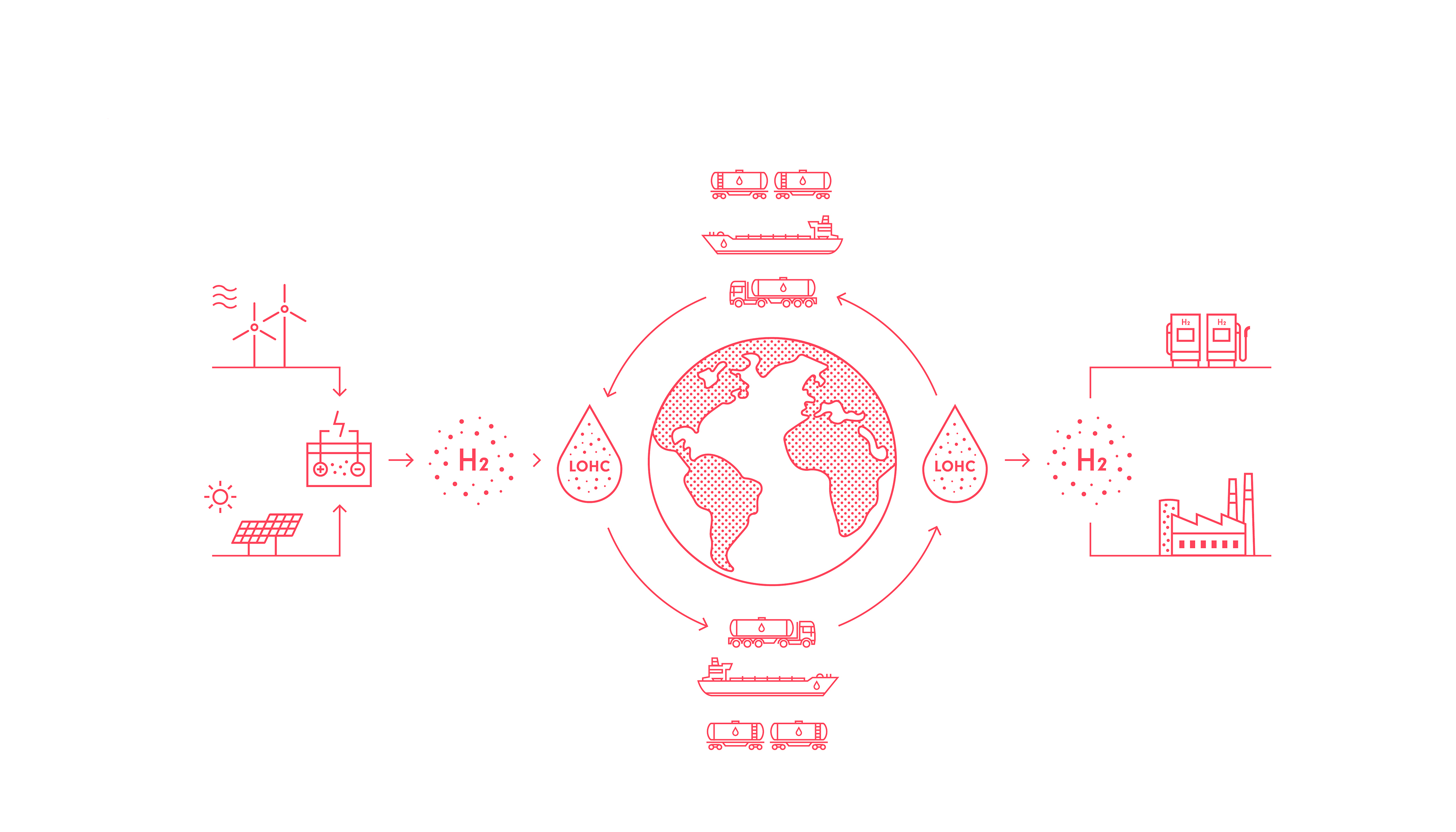
LOHCs are organic liquids that can store hydrogen safely and efficiently by chemically binding it in a process called hydrogenation. After the hydrogen is bound to the carrier, it can be stored or transported like a conventional liquid fuel under ambient conditions. At its destination, the hydrogen is released in a chemical dehydrogenation process. This makes LOHCs a practical solution for long-distance hydrogen transport and storage without the need for high pressures or extremely low temperatures like it is the case for other carrier technologies or hydrogen itself.
Green hydrogen and derivative production based on abundant renewable energy resources in both countries is highly relevant to the climate and economic goals of Egypt and Morocco, offering a way to decarbonise key sectors and industries, drive renewable energy growth based on their high solar and wind potentials and position both countries as green energy hubs between Africa, Europa and the Middle East. Egypt for instance, is striving to deliver eight per cent of the global tradable hydrogen market until 2040. This is why both countries are strongly promoting hydrogen projects in their respective countries.
Egypt: Striving to deliver 8% of tradable hydrogen by 2040
However, to realise this potential, the countries will need to develop a comprehensive infrastructure for the production, storage and transport of green hydrogen. Therefore, assessing multiple technologies and solutions such as pipelines, refueling stations and storage facilities is of the utmost importance. The LOHC Bridge project will address this topic in form of a pre-feasibility study comparing LOHC hydrogen transport infrastructure in Egypt and Morocco to other transport options, and identifying essential product or project design elements.
Key local stakeholders, such as the operators of the Suez Canal Economic Zone in Egypt and IRESEN (L’Institut de Recherche en Énergie Solaire et Énergies Nouvelles) in Morocco will participate in the analysis phase and workshops to share and assess study results. H2Uppp in Egypt and Morocco will support Hydrogenious with networking and results presentations in the Egyptian and Moroccan markets as needed.