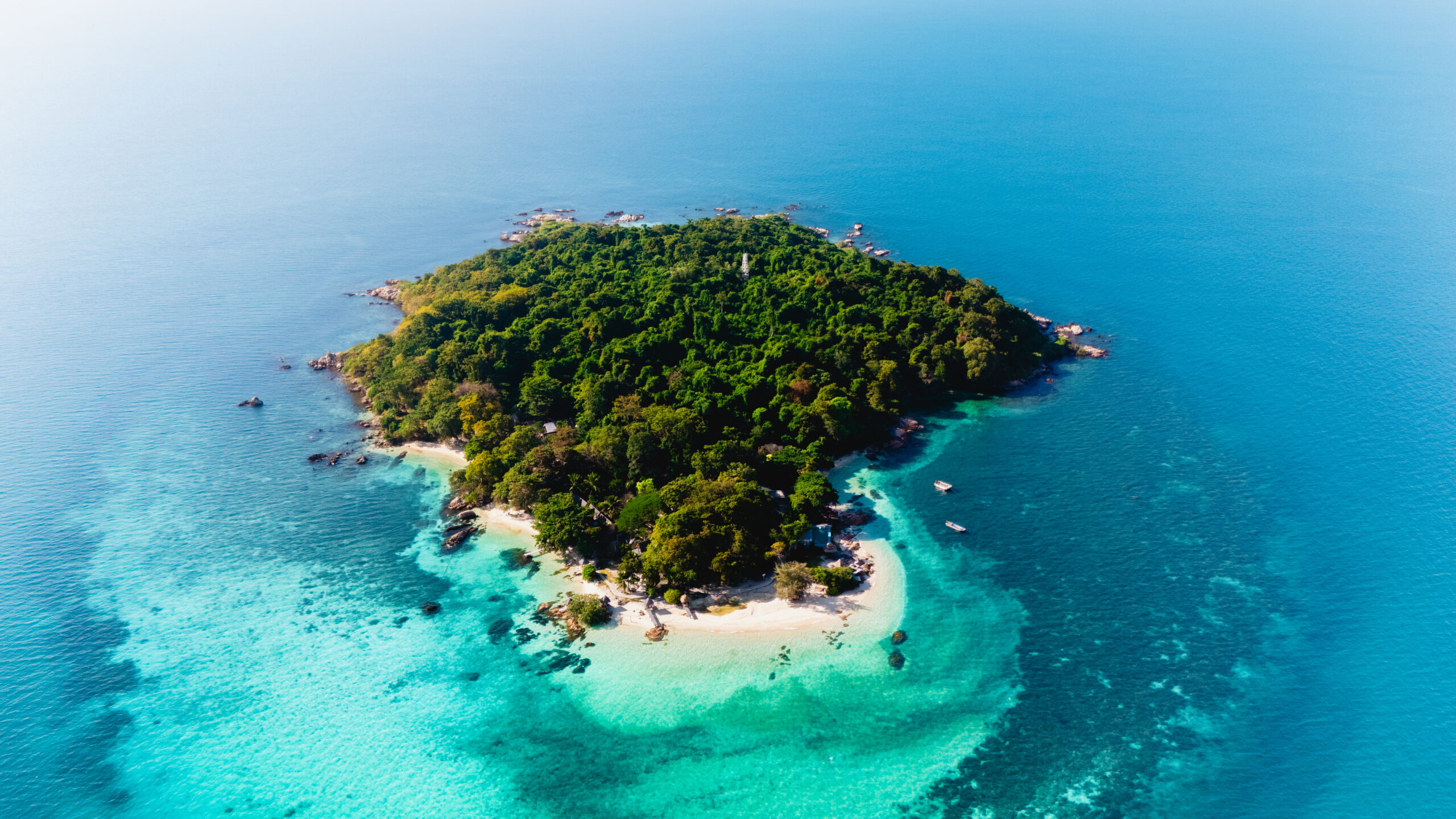
Southeast Asia’s 30,000 islands are as diverse as they are beautiful, but many share a common challenge: energy. Thousands of inhabited islands remain disconnected from mainland electricity grids, relying instead on diesel generators. While dependable, diesel power comes with high costs, carbon emissions, noise, and environmental risks. For tourism-driven economies like Thailand, where resorts dominate energy demand on remote islands, the need for cleaner alternatives is urgent.
In a recent project under the International Hydrogen Ramp-up Programme (H2Uppp), EGS-plan and Deutsche Gesellschaft für Internationale Zusammenarbeit (GIZ) explored a promising solution: green hydrogen. Focusing on Koh Munnork, a private island resort in Thailand’s Rayong province, the study examined whether a carbon-neutral, energy self-sufficient system could replace diesel entirely.
Currently powered solely by diesel, Koh Munnork consumes around 266 MWh of electricity annually, emitting nearly 290 tonnes of CO₂. Beyond emissions, the system creates significant local issues – noise levels harmful to staff, risks of fuel spills, and exposure to exhaust pollutants.
A Hybrid Renewable Energy Solution
The project developed an alternative: a hybrid renewable energy system combining solar photovoltaics (PV), battery storage (BESS), and a hydrogen energy storage system (HESS). In this setup, solar panels generate electricity, batteries handle short-term storage, and hydrogen – produced via electrolysis – serves as long-term energy storage, with fuel cells converting it back into electricity when needed.
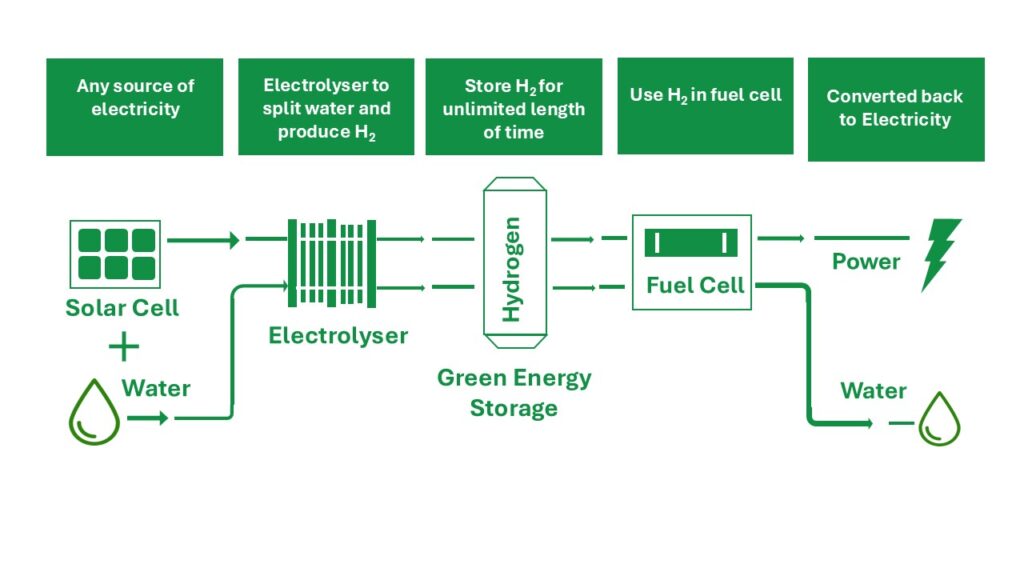
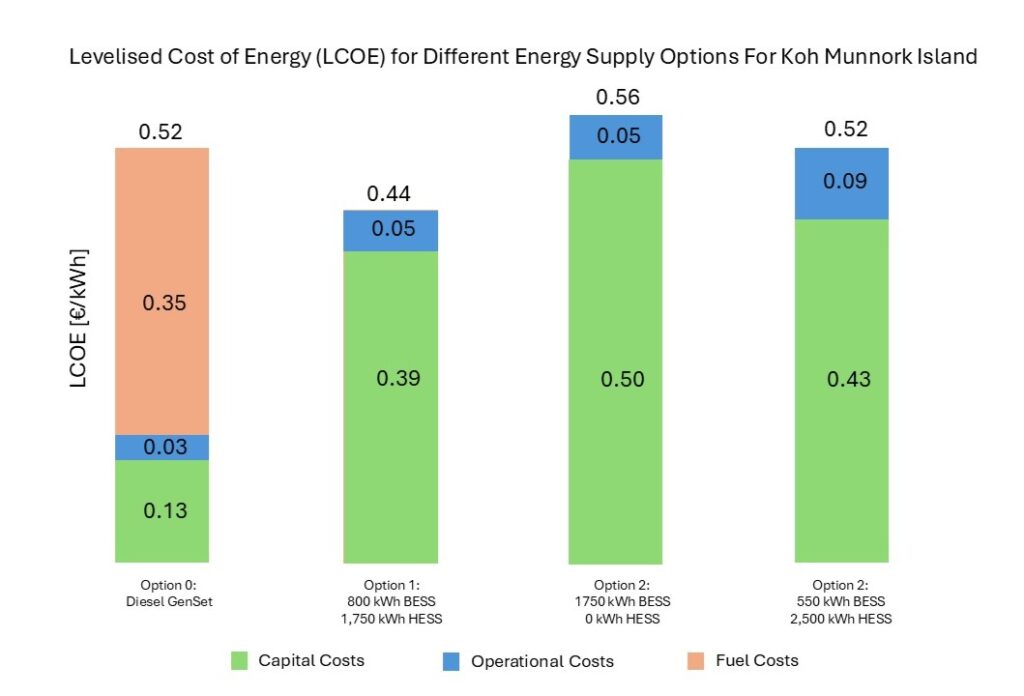
Using real consumption data and simulation tools, multiple system configurations were tested. The result? A hybrid PV-BESS-HESS system emerged as the most cost-effective long-term solution. Although upfront investment is higher than diesel generators, the system delivers lower life-cycle costs and a reduced levelized cost of energy. Hydrogen plays a crucial role in maintaining energy security during periods of low sunlight – something PV panels and batteries alone cannot guarantee.
From a technical standpoint, the project proved that such systems are feasible even in remote island conditions. Containerised equipment, tailored logistics, and careful planning overcame challenges like limited access and lack of port infrastructure. Importantly, the approach is replicable across similar island settings.
Financing the Energy Transition
However, financing remains a major hurdle. Traditional bank loans are difficult to secure –especially in cases like Koh Munnork, where land ownership limitations prevent using property as collateral. While green loans exist, their terms are often not favourable enough. Instead, development banks and international funding programs offering concessional finance or grants appear more viable for enabling such projects.
To test broader applicability, the study also examined locations in Indonesia, the Philippines, and Vietnam. The findings were encouraging: while minor adjustments are needed, the overall system design works across the region. Economic viability depends less on climate and more on diesel prices – making hydrogen especially attractive in areas with expensive or hard-to-transport fuel.
In essence, Koh Munnork offers more than a case study – it provides a blueprint. Green hydrogen, combined with renewables, can turn remote islands into clean, self-sufficient energy systems. With the right financial support, this model could redefine sustainable tourism and energy resilience across Southeast Asia.
From Feasibility Study to Real-World Demonstration
Following the finalisation of the feasibility study, the project is now entering the next phase: the real-world demonstration and operation of a fully integrated renewable energy system on a remote island resort in Southeast Asia. Building on the findings from Koh Munnork and another project, the “Green H2 Islands” project on Koh Jik, the upcoming implementation phase aims to validate the long-term operational performance, reliability and scalability of a hybrid PV-BESS-HESS system under actual island conditions.
The demonstration project will combine solar PV, battery storage, electrolysis, hydrogen storage and fuel cells to replace diesel-based electricity generation with a stable and fully renewable energy supply. While batteries provide short-term balancing, hydrogen enables long-term storage of renewable electricity, a critical advantage for small islands where limited land availability restricts the deployment of large-scale battery systems.
At the same time, the project follows a clear blueprint approach. The knowledge gained from implementation, operation and stakeholder engagement is intended to support the replication of similar renewable hydrogen systems across Thailand and Southeast Asia. Through collaboration between German technology providers and local implementation partners, the project also contributes to technology transfer, regional capacity building and the development of scalable clean energy solutions for remote island communities.
A Blueprint for Southeast Asia
In this sense, the Koh Munnork pilot represents not only a successful feasibility study, but a concrete pathway toward implementing resilient, low-carbon and energy-independent island systems throughout Southeast Asia.