Ramping up Power-to-X production will stimulate domestic and international energy trade. For example, the German hydrogen strategy anticipates that over 80 % of the 2050 hydrogen demand will have to be covered by imports. Countries with high production potential must strike a balance between their own domestic energy transformation needs and international trade opportunities. These priorities should be clarified in national development and climate mitigation strategies, for example by weighing up reducing fossil fuel import dependence versus gaining export profits.
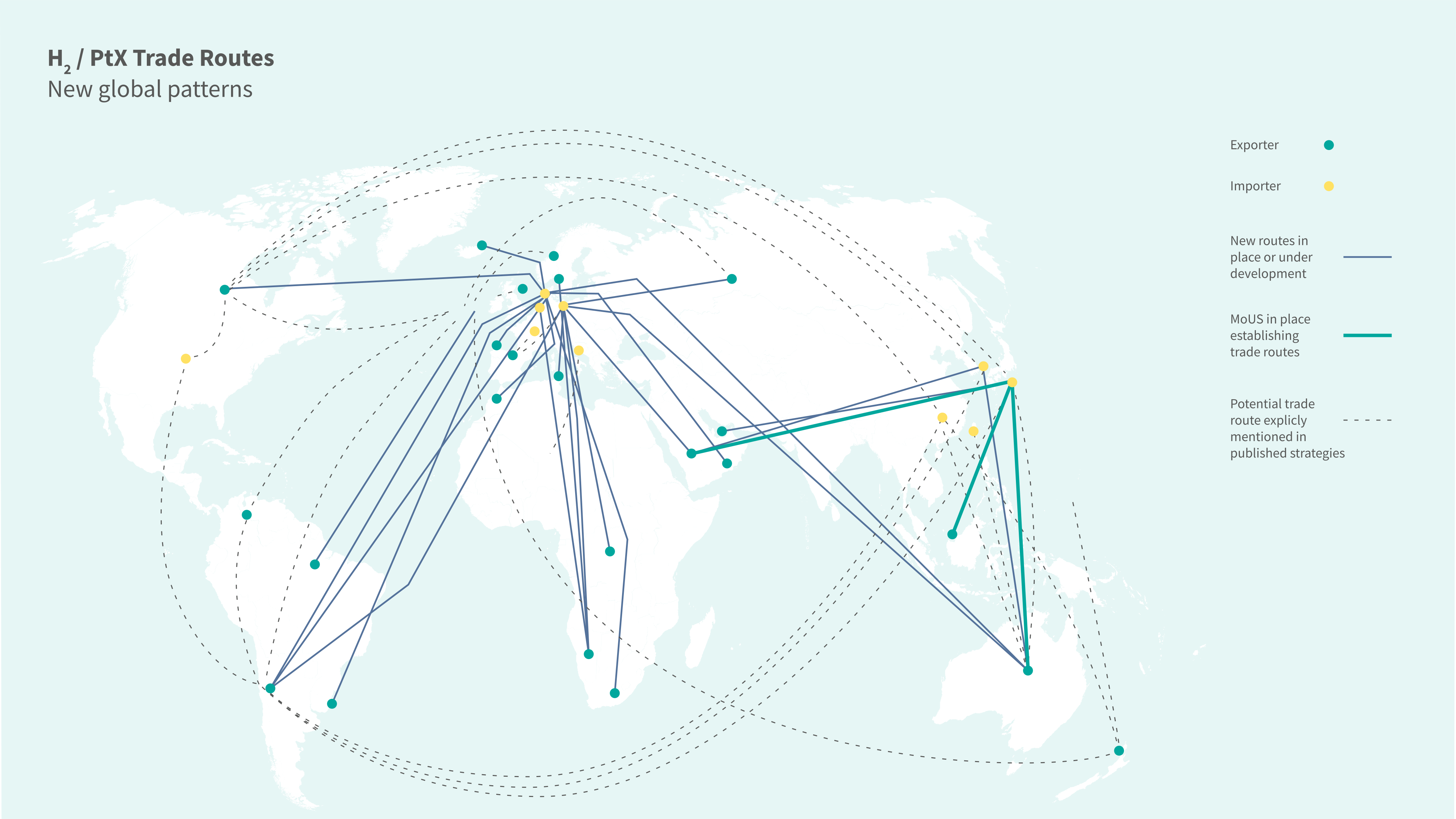
Source: International PtX Hub. Illustration adapted from IRENA (2022) “Global hydrogen trade to meet the 1.5°C climate goal: Part I – Trade outlook for 2050 and way forward”.
Figure explanation: With the transformation of the global energy system, the transition from fossil to renewable sources, global supply and trade relations will undergo a fundamental change. The IRENA map of existing and emerging hydrogen trade routes provides a rough indication of potential new trade patterns. It shows that the major importing destinations in Europe, Japan and Korea can draw on a multitude of potential suppliers, e.g. exporting countries in Africa and Latin America. A number of Memoranda of Understanding (MoUs) have already been signed. In most cases, however, it will not be hydrogen that is transported, but hydrogen derivatives such a e-ammonia or e-methanol.
Trade and transport considerations are closely related. If pipeline infrastructures exist, are they ready to transport hydrogen? Are ports equipped with hinterland connections, storage capacities, and operational terminal equipment?
It also raises the fundamental issue of whether trade must result in the physical transport of products, or if it can happen in virtual transfers of certified properties. From a sustainability and cost perspective it makes a huge difference if tonnes of hydrogen are shipped around the globe or certificates are exchanged via electronic trading platforms. Such ‘book-and-claim’ or ‘certify-and-trade’ systems could be beneficial from a defossilisation perspective. It would however have implications for the competitiveness of industries and could result in major shifts in global value chains.
Technology transfer and innovation could boost production and reduce costs. There is an expected boom in demand for electrolysers, which could benefit manufacturing industries.


