Scaling Power-to-Liquid fuels
Power-to-Liquid fuels need to move from concepts and laboratory testing into real industrial environments before they can be scaled.
We support industrial companies in developing pilot plants that demonstrate sustainable fuel production, generating the technical, operational and commercial experience needed for larger investments.
The market opportunity for e-fuels is immense. Demand for aviation fuel is expected to increase significantly in the coming years. The shipping industry is beginning to transition to e-methanol as a fuel.
Currently, however, only a few companies have the necessary experience in Power-to-Liquid technologies to scale up production. Power-to-Liquid technology converts green electricity and sustainable carbon into liquid fuels such as e-methanol and e-Sustainable Aviation Fuels (SAF), lowering carbon emissions substantially.
Unlike biofuels, which depend on restricted biomass feedstock, they offer the strongest long-term scaling potential of sustainable fuels.
To seize this potential, pilot projects are essential to prove the new technology in real-world conditions, establish operational track records, de-risk larger plants, and enable long-term offtake agreements that will encourage investment and reduce cost.
What we offer
We support industrial partners in developing investable Power-to-Liquid pilot projects, from first plant concepts and feasibility analysis to a preliminary design basis and tendering of a bankable engineering and execution package.
Benefits of a pilot plant
Testing Pilot plants test the specific configuration of energy and feedstock inputs for production in real conditions.
Learning We facilitate the exchange of experiences between similar pilot projects being developed in multiple countries.
Training Developing and operating the pilot plants trains technical staff. These skills can be transferred to larger-scale plants.
Demonstrating Showcasing the pilot plant lets the operator demonstrate the technology to partners and investors.
Scaling The pilot plant provides real data and a proven track record to inform engineering of larger-scale plants.
Catalysing As the pilot plants offer replicable concepts, their lessons learnt can accelerate regional Power-to-Liquid development.
How we work
The project development support covers four phases.
Before developing the plant concepts, we assess the current status quo of market and technology development.
- Market check: a structured overview of demand, supply and the regulations driving the market for Power-to-Liquid fuels, and a first look at potential off takers.
- Technology check: technical intelligence on the main Power-to-Liquid process routes, feedstock needs and key equipment, with a snapshot of technology providers and reference projects.
- Regulatory check: a briefing on green fuel certification and export market rules, with a focus on the EU’s Renewable Fuels of Non-Biological Origin (RFNBO) requirements and what they mean for plant design.
- Plant concept development: turning the findings into the most promising plant concepts, with process flow charts, key specifications and first cost estimates.
The most promising plant concept is selected and then tested in a full feasibility study, including analysis of electricity and carbon sourcing.
Based on the feasibility study of the confirmed plant concept, basic engineering
and cost estimates are refined, while the partner advances on-site development and permitting.
A procurement and tendering strategy is developed, including the technical tender specifications. The project is handed over to the partner.
After the development process of around 2 to 3 years, the company takes the final investment decision and launches the tender for construction work.
Each pilot project also opens opportunities for the wider Power-to-X ecosystem, including engineering firms, technology suppliers and construction contractors.
Current projects
With the project partner Sonatrach, we conducted a feasibility study for the production of e-methanol and e-SAF. The Methanol-to-Kerosene process route has been selected and is entering the engineering phase in Q4 2026.
Project partner Ecopetrol is already producing green hydrogen at its Cartagena refinery. The market and regulatory check for the Power-to-Liquid pilot plant has commenced in June 2026. Read more
As a first step, a pre-feasibility study assessed the potential to develop a commercial SAF facility in Kenya, focusing on the Methanol-to-Jet pathway. Read more
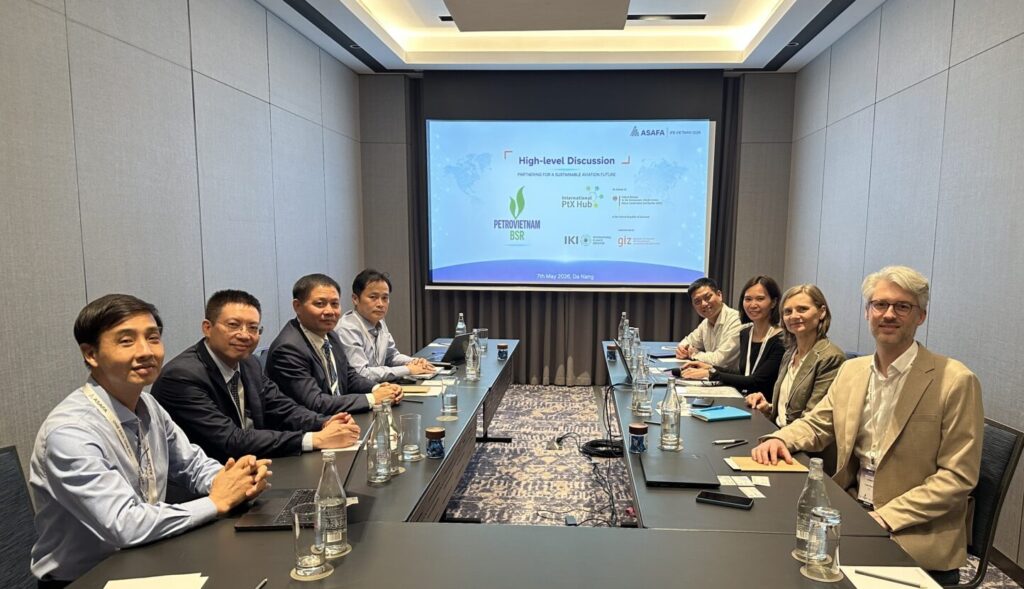
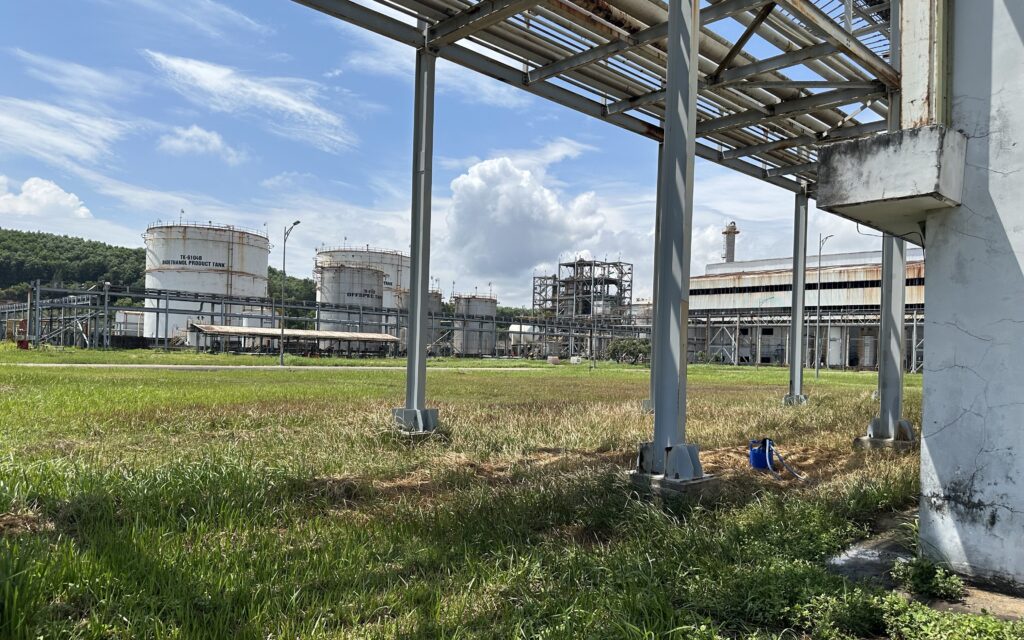
Multiple pathways for producing e-methanol or e-SAF at the Dung Quat refinery of Binh Son Refining and Petrochemical Joint Stock Company are currently being assessed. Read more
Building on earlier work
Together with the Moroccan research institute IRESEN, the PtX Hub developed a first-of-its-kind Power-to-Liquid research and training plant concept. It covers the entire Power-to-Methanol value chain, from electrolysis to synthesis and refining.
The aim of this project was to bridge the gap between lab-size and industry-scale, in order to train the engineers and technicians who will operate future plants. IRESEN and German development finance agency KfW are currently finetuning the technical requirements.
Cooperating with industrial companies
Companies that are well placed to decarbonise the fossil fuel industry are the ones that are running it today. They can leverage their existing fuel refining experience and industrial infrastructure to gain a foothold in the emerging e-fuels markets, as demonstrated by current projects in Colombia and Viet Nam.
Interested? Contact:

Frank Münk
I am providing technical assistance for PtX project and market development activities of the PtX Hub, collaborating closely with our teams and partners on the ground. I contribute to the pivotal goal of global energy transition and working with an inspiring team of international experts every day adds a lot to my motivation.
Focus
I am currently working on the development of a Power-to-Liquid pilot plant in Morocco and a long-term energy transition study for South Africa.
Mission
My aim is to disseminate practical knowhow about PtX production and usage that adds to the goal of a global just energy transition.

Johannes Arndt
My work focuses on coordinating among our project implementation partners. I’m also responsible for our maritime activities in South Africa. Green hydrogen and PtX are exiting solutions to defossilise our economies, with shipping serving as a key catalyst.
Focus
My efforts are directed towards supporting our partners in strategically positioning the countries maritime sector for the future, hence enabling broad PtX applications.
Mission
Trustful and effective collaboration among our partners enables us to contribute with quality-and impactful work to a global just energy transition.