The energy transition will have significant implications for the labour market. IRENA estimates that by 2050 employment in the fossil sector will have dropped by 27 %, while employment in the renewable energy sector will have increased by 64 %.
Power-to-X projects will contribute to this positive trend. However, employment opportunities and threats will differ across countries, subnational regions, and the skill profiles of the workforce. Regions with high renewable energy potential will benefit, while regions dependent on fossil fuels will likely suffer negative effects.
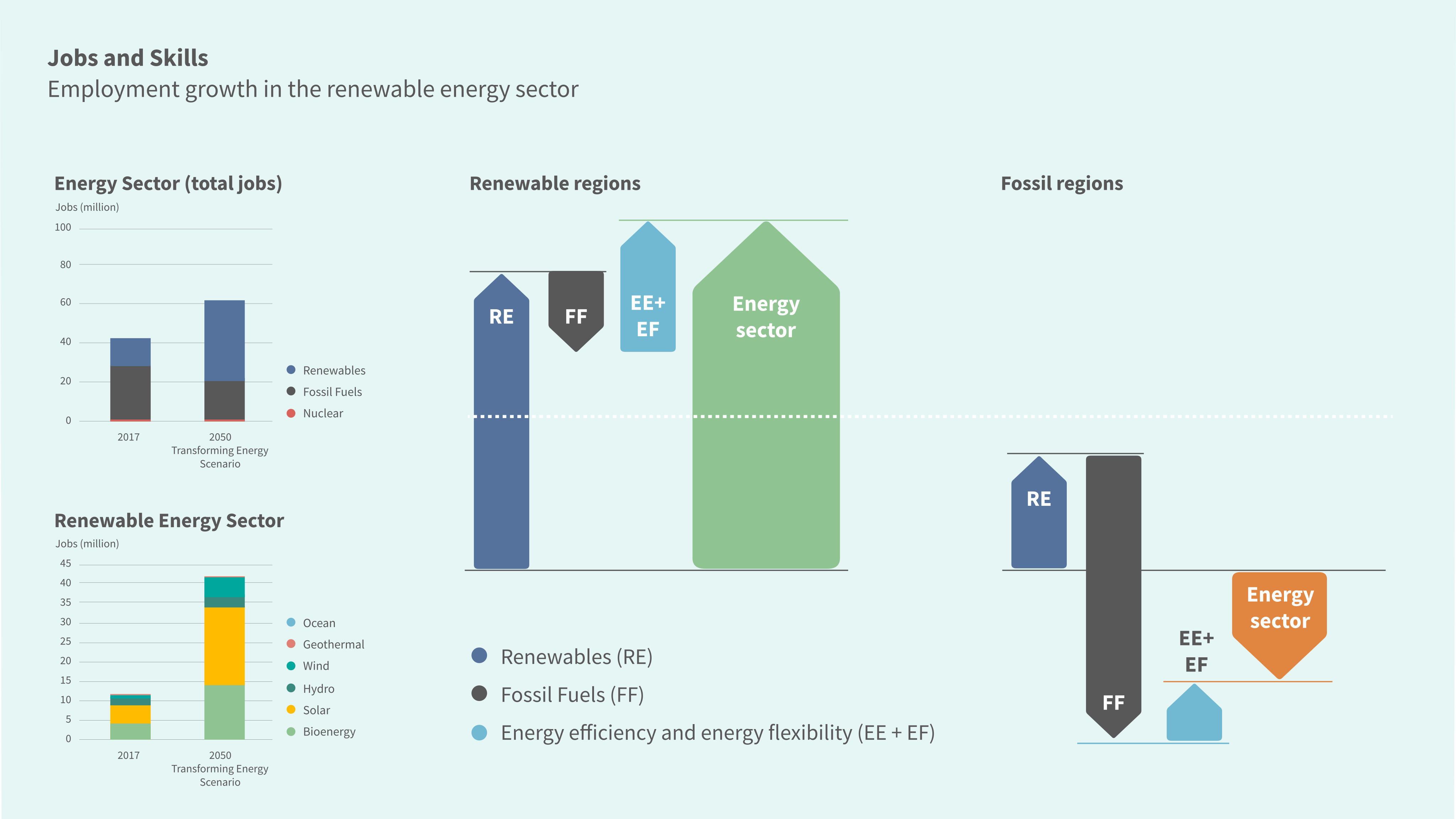
Source: International PtX Hub, illustration adapted from IRENA and ILO (2023) “Renewable Energy and Jobs: Annual Review 2023” and IRENA (2020) “Global Renewables Outlook: Energy transformation 2050”.
Figure explanation: The transformation towards a fossil free renewable energy sector and the rapid growth of the power sector will have profound consequences for energy-related employment. Job creation is likely to be the most significant social opportunity associated with the development of the hydrogen and Power-to-X sector. According to the International Renewable Energy Agency (IRENA) and the International Labour Office (ILO), global employment in the energy sector will double by the middle of the century. Whilst jobs in fossil and nuclear energy will shrink, employment in renewable energy is expected to triple. Including jobs related to improving energy efficiency, energy flexibility and power grids, global energy employment is set to reach 100 million jobs by 2050. However, the gains and losses will not be evenly distributed. In fossil dominated regions, job losses will not always be offset by new job opportunities in renewables and energy efficiency. They will be struggling with overall job losses. In renewable energy regions, the overall balance is expected to be positive.
It is therefore important to invest in training and re-skilling of different employee groups, such as women, youth or ethnic minorities. Proactive engagement is needed at national, local and corporate level.


